Soft bond for hard stone
Hard, dense stone such as granite needs a soft bond so the matrix wears back and keeps exposing fresh diamond. A hard “universal masonry” bond on granite polishes over and stops cutting.
Natural and engineered stone is dense, abrasive and unforgiving. Almost every “bad blade” complaint traces back to three things: the wrong bond for the stone, a peripheral speed that is too high, and not enough water.
Hard, dense stone such as granite needs a soft bond so the matrix wears back and keeps exposing fresh diamond. A hard “universal masonry” bond on granite polishes over and stops cutting.
Water cools the bond, flushes abrasive slurry and suppresses silica dust. On a bridge saw or CNC it is effectively mandatory — and it can add 30–50 % to blade life.
Blade diameter changes everything. Use peripheral speed: m/s = π × D(m) × rpm ÷ 60. A 400 mm blade at 3,000 rpm is 63 m/s — nowhere near a safe or efficient range for granite.
Pick the row for your material. If two rows look similar, start with the slower option — it is almost always the safer and cheaper mistake.
| Material | Recommended blade | Bond | Line speed | Cooling |
|---|---|---|---|---|
| Hard granite (India Black, Shanxi Black) | Segmented or laser-welded | Soft | 25–30 m/s | Wet, 5–7 L/min |
| Medium granite (typical countertops) | Segmented / turbo | Soft–medium | 30–35 m/s | Wet |
| Marble, limestone, onyx | Continuous rim | Medium | 30–40 m/s | Wet |
| Engineered quartz | Turbo / continuous, fine grit | Medium–hard | 25–30 m/s | Wet (mandatory) |
| Porcelain slab / sintered stone | Continuous rim, fine grit | Hard | 20–25 m/s | Wet |
| Concrete, brick, block | Segmented | Hard | 30–40 m/s | Wet or dry * |
In order. Skipping a step usually costs more time than it saves.
Read the stone first. Dense hard granite wants a soft bond and 25–30 m/s. Soft marble or limestone wants a medium bond and can run faster. Engineered quartz behaves like a hard granite but is more brittle — continuous rim, fine grit, always wet.
Dial the machine to the rpm that gives you your target line speed for that blade diameter. Never leave the saw on one setting for every blade size — a 600 mm blade at 1,500 rpm is 47 m/s, far too fast for granite.
Run a new blade 10–15 % slower for the first 10–15 cuts. This seats the diamonds in the bond. Cranking a fresh blade straight to full speed knocks diamonds loose before the metal has worn enough to hold them.
Start at about 70 % of the maximum feed and increase until you see a steady, fine slurry and a straight kerf. Rubbing at too low a feed polishes the diamonds flat — the classic glazing failure that makes a blade feel blunt.
Aim for 5–7 L/min with the nozzles wetting both sides of the kerf. If the blade starts cutting slowly or smoking even though speed and feed are correct, check the water first — it is almost always the cause.
On 20 mm and thicker material, cut in 3–5 mm passes. A deep cut increases the contact area, raises heat and loads the core. Shallow passes let the blade clear and the slurry carry the swarf away.
Use these as a starting point and adjust to what the cut is telling you. Start slow and work up.
| Blade Ø | Max rated rpm | Granite 25–35 m/s | Marble 30–40 m/s | Typical machine |
|---|---|---|---|---|
| 105 mm (4") | 13,300 | 4,547–6,366 | 5,457–7,276 | Angle grinder |
| 125 mm (5") | 12,200 | 3,820–5,348 | 4,584–6,112 | Angle grinder |
| 180 mm (7") | 8,500 | 2,653–3,714 | 3,183–4,244 | Angle grinder |
| 230 mm (9") | 6,600 | 2,076–2,906 | 2,491–3,321 | Angle grinder |
| 300 mm (12") | 3,200 | 1,592–2,228 | 1,910–2,546 | Masonry / tile saw |
| 350 mm (14") | 2,800 | 1,364–1,910 | 1,637–2,183 | Bridge saw |
| 400 mm (16") | 2,500 | 1,194–1,671 | 1,432–1,910 | Bridge saw |
rpm = 60 × v ÷ (π × D) and are the grinding range, not the safety limit. Always stay below the max rpm laser-etched on the blade.The symptom is rarely the problem. Read the root-cause column before you change anything.
| Symptom | Root cause | Fix |
|---|---|---|
| Blade turns shiny, sparks, cut slows to a crawl | Bond too hard for the stone, or line speed too high — the diamonds are rubbing, not cutting | Drop speed 10–15 %, take shallower passes, dress the blade for a few seconds in a soft abrasive block, brick or cinder block |
| Edge chipping / blow-out on marble | Coarse blade, forced feed, or nothing supporting the stone at exit | Switch to a continuous rim blade, reduce feed, support the off-cut, cut 2–3 mm proud of the finish line and trim |
| Segments wear fast but the cut is clean | Running too fast for the stone, or a bond that is too soft | Reduce line speed by 10 %, verify the bond against the table, check water flow |
| Smoke or burning smell at the kerf | Water not reaching the cut | Raise flow to 5–7 L/min, re-aim the nozzles at both faces, check for a blocked line |
| Kerf wanders, cut wanders offline | Blade out of tension, worn flanges, or feed too high | Check runout and flange condition, lower the feed, keep a fresh blade for finish cuts |
| Sub-surface cracks that appear days later | Thermal shock from dry cutting brittle stone | Cut wet. If dry cutting is unavoidable, take 3 mm passes and free-spin the blade every 30 seconds to cool |
Every item below is made by EXTRACUT and links straight to the product page.
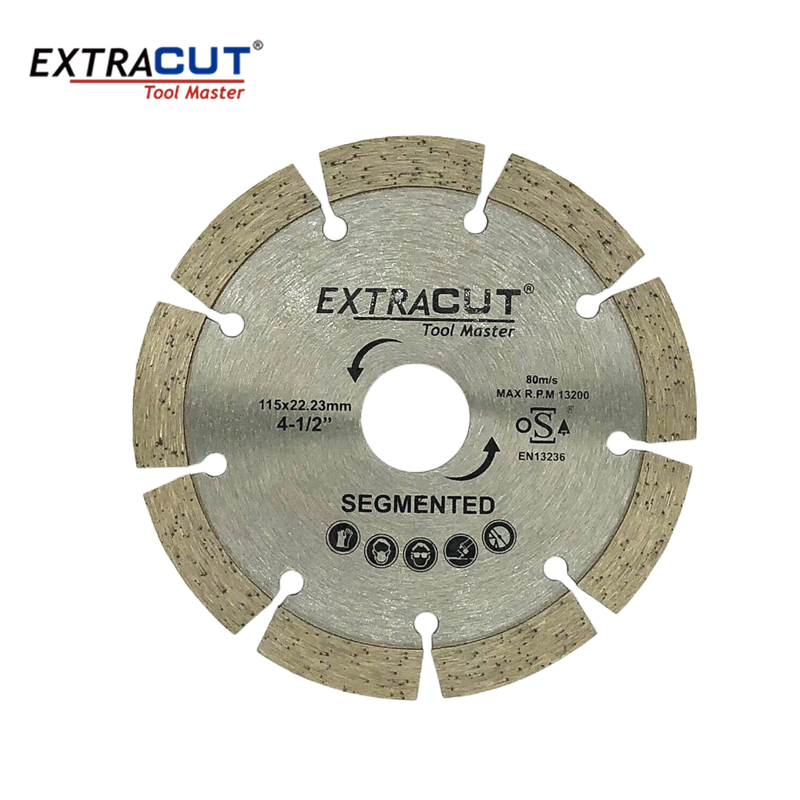
Fast rough cutting in granite and concrete — open segments clear slurry quickly.
View product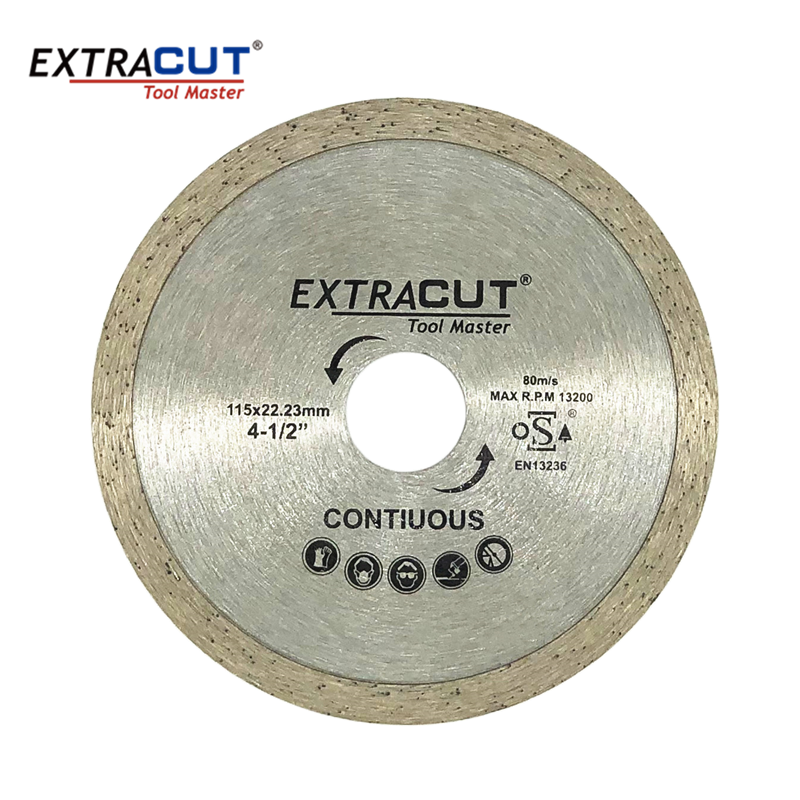
Continuous rim for chip-free edges on marble, quartz and porcelain slab.
View product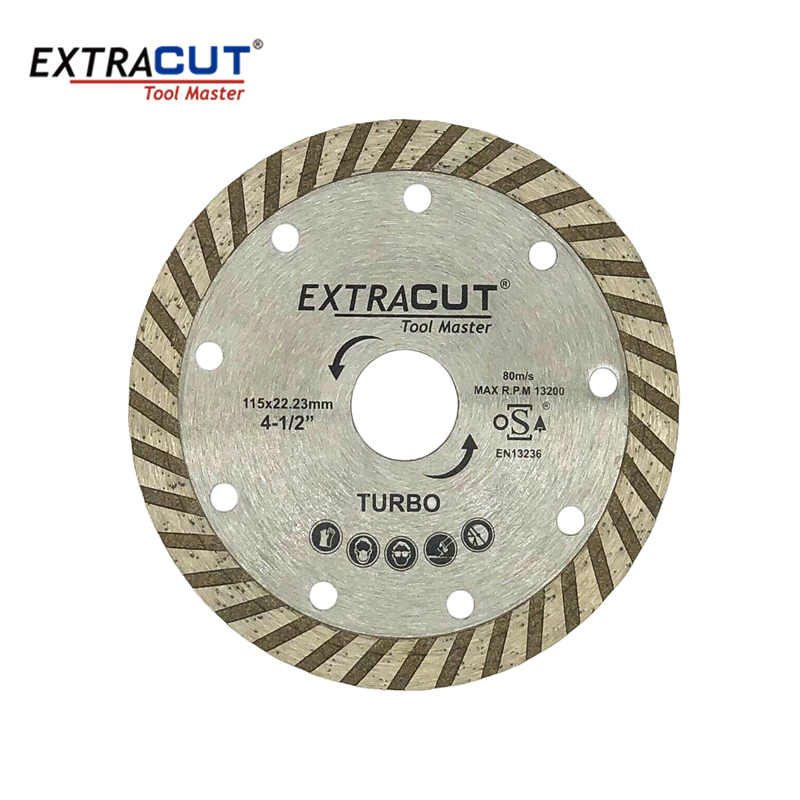
Turbo rim: the all-round shop blade for stone fabricators.
View product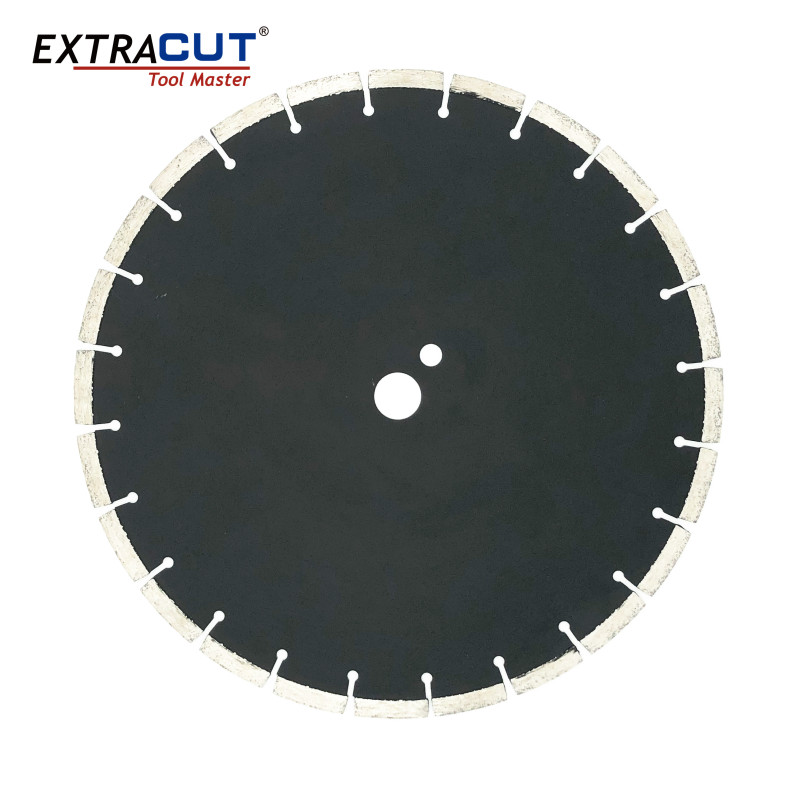
Laser-welded segments rated for dry cutting and heavy daily production.
View product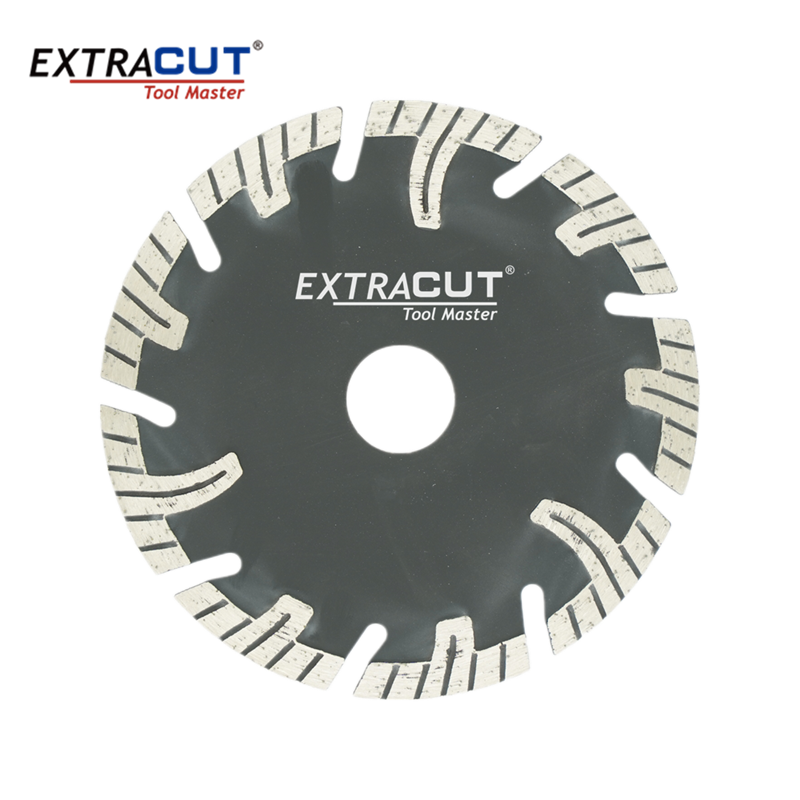
Premium bond with higher diamond concentration for the hardest granites.
View product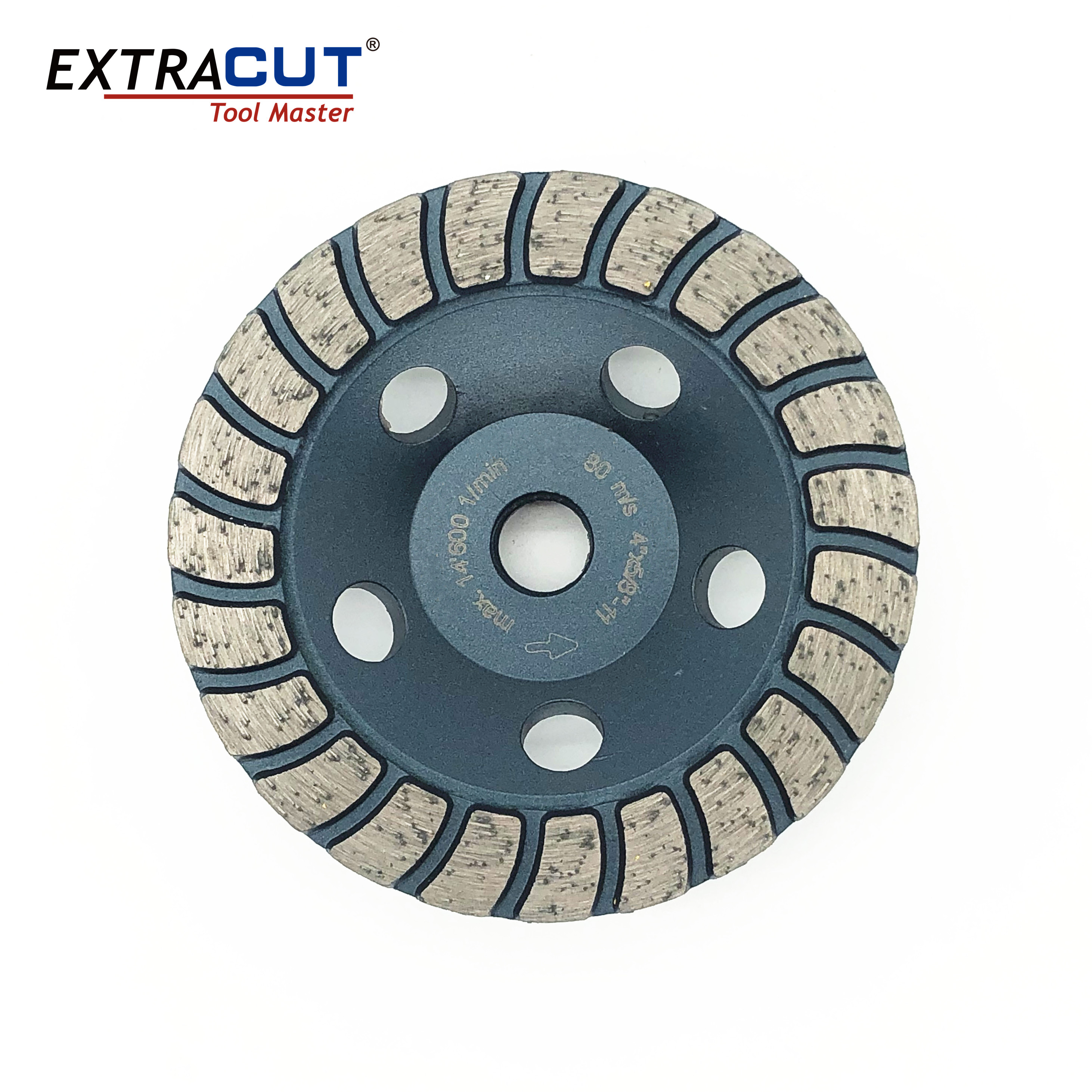
Cup wheel for grinding, levelling and chamfering after the cut.
View product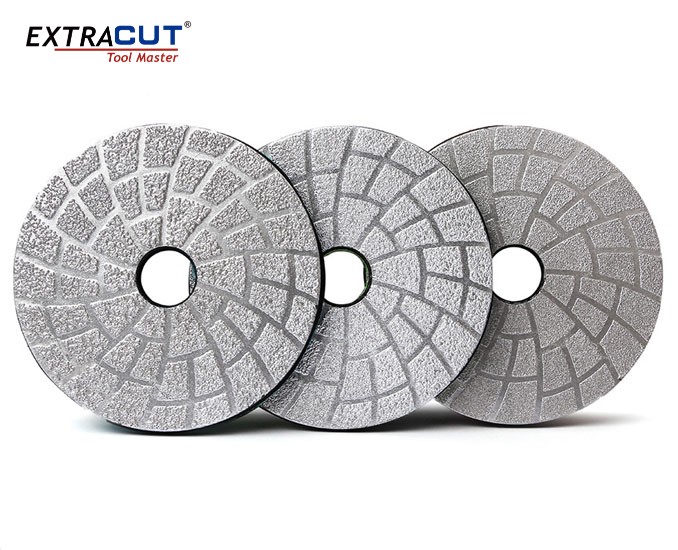
Polishing pads to take a cut edge through to a finished surface.
View product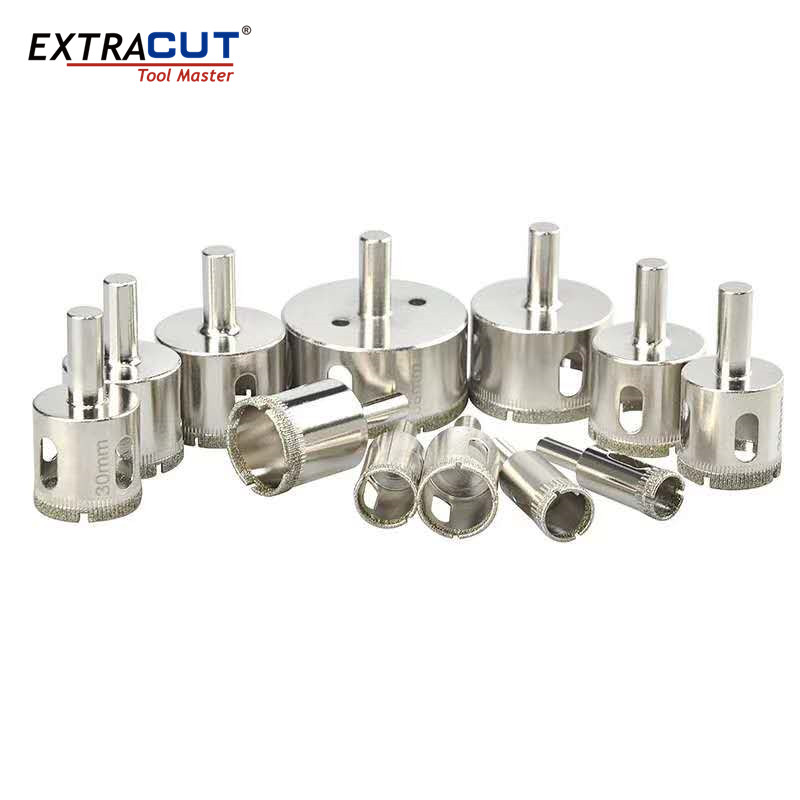
Electroplated hole saw for sinks, taps and electrical cut-outs in stone.
View productShort list, long consequences. These apply to every job on this page.
The questions our technical team answers most often.
Send us the material, the machine and the finish you need. Our engineers will specify the blade, bond or bit — and quote it with a sample if you want to test before you commit.