Tooth count decides the finish
60–80 T for mild steel and angle iron, 80–100 T for aluminium sheet and extrusion, 10–24 TPI bi-metal for pipe and conduit. Coarser teeth cut faster and rougher; finer teeth leave a cleaner edge.
Carbide-tipped blades cut metal; abrasive discs grind it away. A TCT blade removes a chip, runs far cooler and finishes almost burr-free. The trick is matching tooth count and rpm to the material — and treating stainless completely differently from mild steel.
60–80 T for mild steel and angle iron, 80–100 T for aluminium sheet and extrusion, 10–24 TPI bi-metal for pipe and conduit. Coarser teeth cut faster and rougher; finer teeth leave a cleaner edge.
Stainless work-hardens the moment a tooth rubs instead of cutting. Run it slower (1,000–1,500 rpm) with coolant and keep a positive feed. Rushing a stainless cut hardens the surface, and hardened steel eats blades.
Aluminium is soft and gummy. Use a high-tooth-count non-ferrous blade, clear chips often and lubricate to stop a built-up edge. Never cut aluminium with an abrasive disc — it clogs the wheel and can burst it.
Pick the row for your material. If two rows look similar, start with the slower option — it is almost always the safer and cheaper mistake.
| Material | Blade | Speed | Technique |
|---|---|---|---|
| Mild / low-carbon steel | TCT, 60–80 T | 1,500–2,500 rpm | Steady feed, straight cuts, light lubricant |
| Stainless steel 304 / 316 | Carbide or cermet, fine pitch | 1,000–1,500 rpm | Slow + coolant, never force |
| Aluminium 6061 / 6063 | Non-ferrous TCT, 80–100 T | 2,500–3,500 rpm | Clear chips often, lubricate |
| Copper / brass | Fine-tooth | 2,000–3,000 rpm | Light pressure, support the work |
| Box tube, angle, rebar (14″ chop saw) | TCT, 66–120 T | ≈1,800 rpm | Clamp both sides of the cut |
| Pipe, conduit, demolition | Bi-metal, 10–24 TPI | Stroke speed | Support the off-cut |
| Sheet metal ≤3 mm | Step drill | 300–600 rpm | One bit, many hole sizes |
| Structural steel, plate | Annular cutter | 400–800 rpm | Magnetic drill + coolant |
In order. Skipping a step usually costs more time than it saves.
Metal moves as it releases stress. Clamp the workpiece either side of the kerf so it cannot pinch the blade — pinching is what produces kickback.
Coarse (40–60 T) for thick solid stock, 60–80 T for general steel, 80–100 T for aluminium and thin material. Too few teeth snag; too many clog with soft materials.
A carbide blade cuts by removing chips, not by grinding. If you have to push, something is wrong — wrong blade, wrong speed, or a dull tooth. Excessive feed is the number one cause of broken carbide tips.
Recutting chips multiplies heat and destroys edges. On aluminium especially, lift out of the cut periodically and clear the kerf.
Use soluble oil, cutting fluid, or a mister. For stainless, keep the coolant on continuously from the first tooth to the last; intermittent cooling plus work-hardening is how a good blade dies young.
A flap wheel or sanding disc takes the burr off in seconds. Deburring is part of the cut, not an optional extra — it protects the finish, the assembly and the person handling the part.
Use these as a starting point and adjust to what the cut is telling you. Start slow and work up.
| Workpiece | Cutting speed | Ø3 mm | Ø6 mm | Ø10 mm | Coolant |
|---|---|---|---|---|---|
| Mild / low-carbon steel (S235, 1045) | 25–30 m/min | 2,653–3,183 | 1,326–1,592 | 796–955 | Soluble oil or cutting fluid |
| Alloy steel (4140, 42CrMo4) | 15–20 m/min | 1,592–2,122 | 796–1,061 | 477–637 | Flood coolant |
| Stainless steel (304, 316) | 10–15 m/min | 1,061–1,592 | 531–796 | 318–477 | Heavy coolant, slow feed |
| Cast iron | 20–25 m/min | 2,122–2,653 | 1,061–1,326 | 637–796 | Dry or mist |
| Aluminium (6061, 6063) | 60–100 m/min | 6,366–10,610 | 3,183–5,305 | 1,910–3,183 | Kerosene or mist |
| Brass / bronze | 60–90 m/min | 6,366–9,549 | 3,183–4,775 | 1,910–2,865 | Light oil |
| Copper | 45–60 m/min | 4,775–6,366 | 2,387–3,183 | 1,432–1,910 | Light oil |
The symptom is rarely the problem. Read the root-cause column before you change anything.
| Symptom | Root cause | Fix |
|---|---|---|
| Stainless polishes instead of cutting; teeth dull fast | Work-hardening from too-high rpm or too light a feed | Drop to 1,000–1,500 rpm, increase feed so each tooth bites, flood with coolant |
| Aluminium gums up the teeth (built-up edge) | Chips not cleared, or no lubricant | Use an 80–100 T non-ferrous blade, kerosene or cutting oil, lift to clear chips |
| Blue or brown discolouration, burning smell | Cutting too fast without coolant | Slow down, add fluid, check the teeth are still sharp |
| Blade climbs out of the cut / kickback | Work not clamped, or blade entering at an angle | Clamp both sides, let the blade reach full rpm before contact, enter square |
| Drill wanders on entry | No centre punch, started too fast | Centre punch or pilot hole, start at 300–600 rpm |
| Heavy burr on the cut edge | Tooth count too low, feed too high | Finer pitch, lower feed, deburr with a flap wheel |
| Triangular or out-of-round hole from a step drill | Too much speed, too much pressure | 300–600 rpm in sheet metal, light steady pressure, let the step do the work |
Every item below is made by EXTRACUT and links straight to the product page.
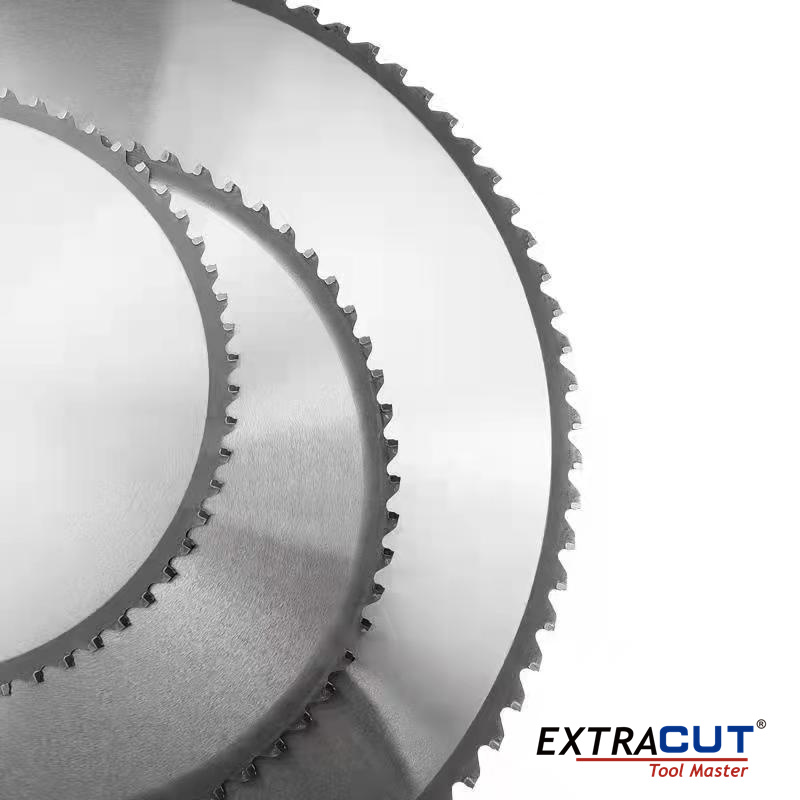
Cermet-tipped blade for steel: cuts up to 50× cooler than an abrasive disc.
View product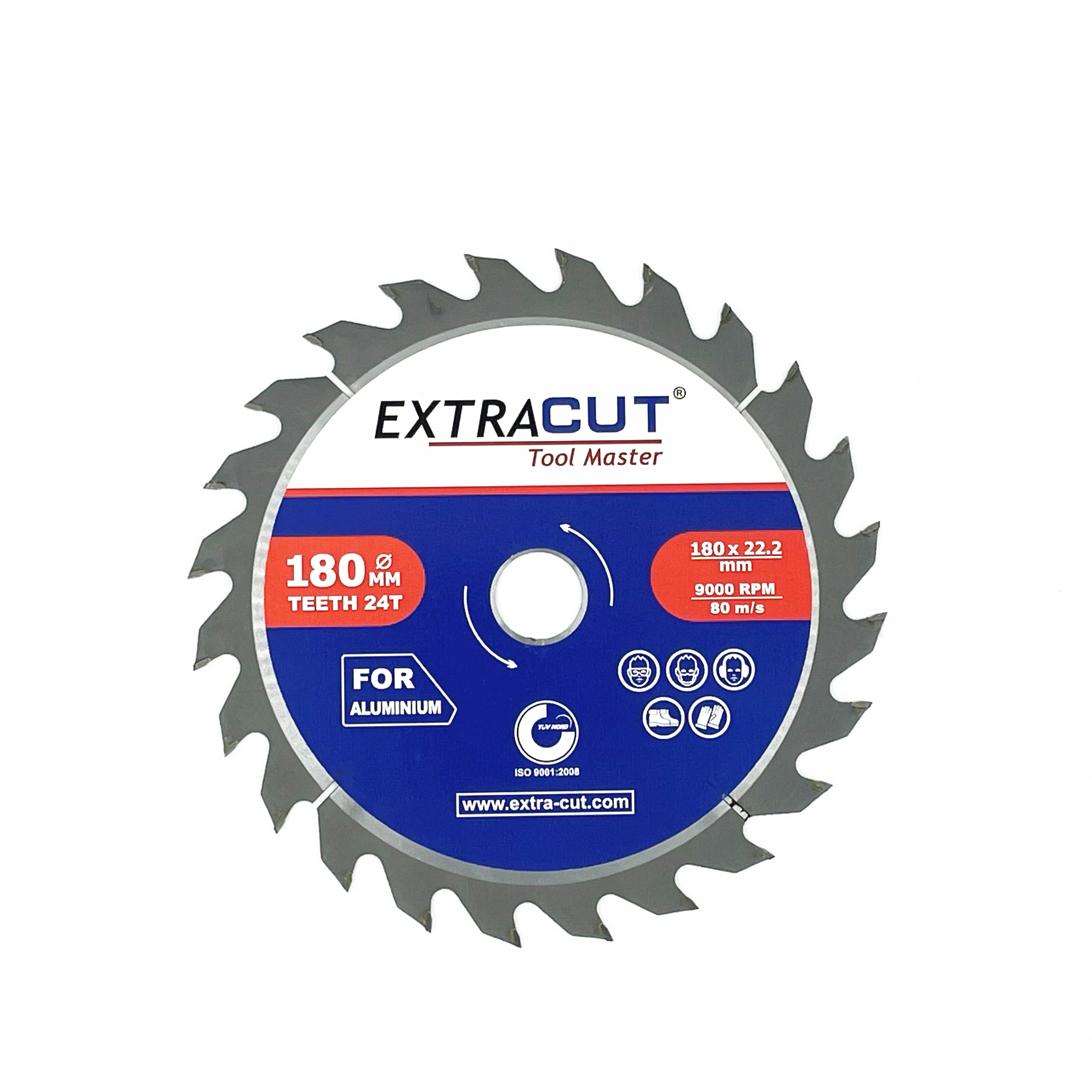
High-tooth-count non-ferrous blade for aluminium sheet and extrusion.
View product
T41 thin cutting disc for angle grinders — fast, clean, minimal material loss.
View product
T27 grinding disc for weld dressing and surface preparation.
View product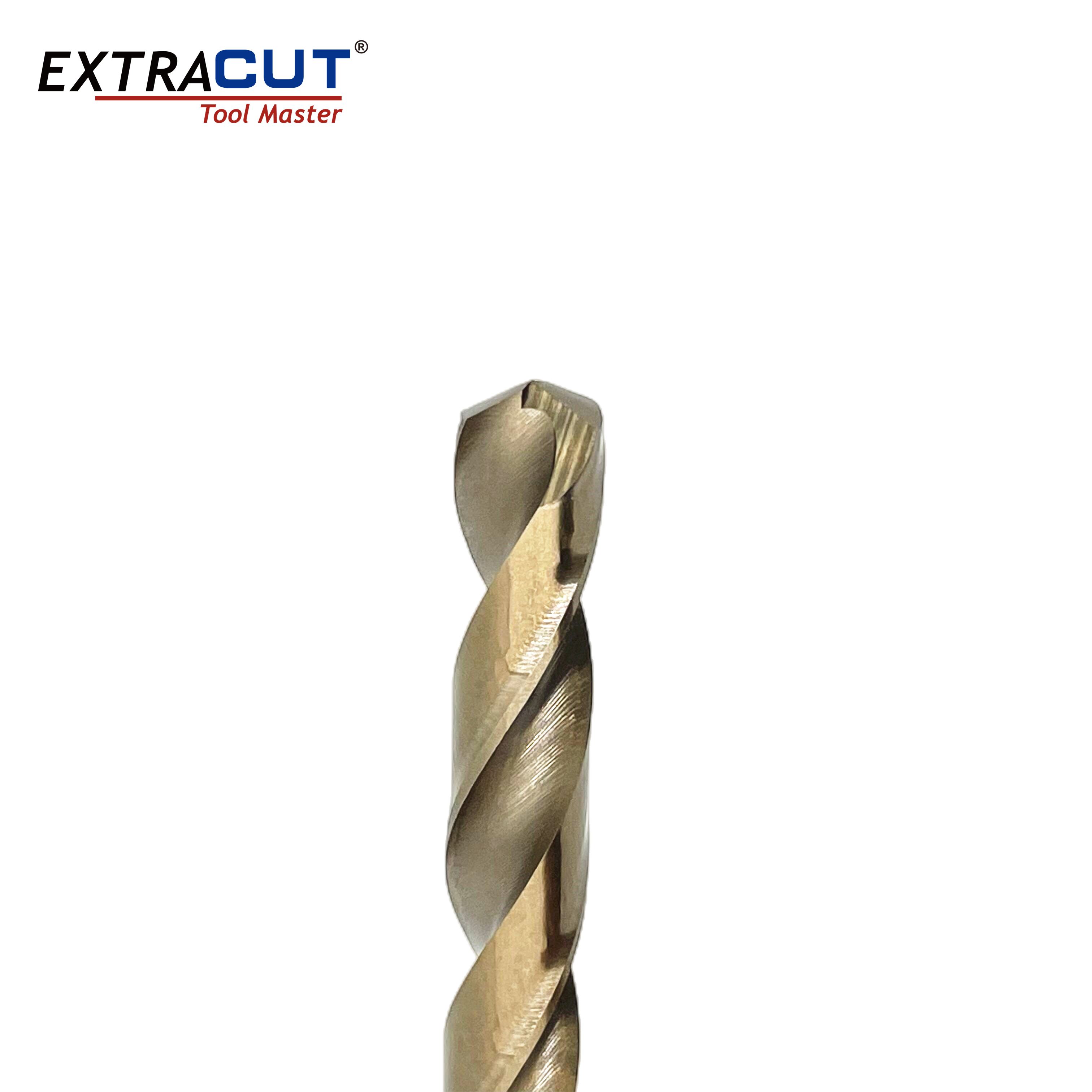
Cobalt (M35) twist drills for stainless and work-hardening alloys.
View product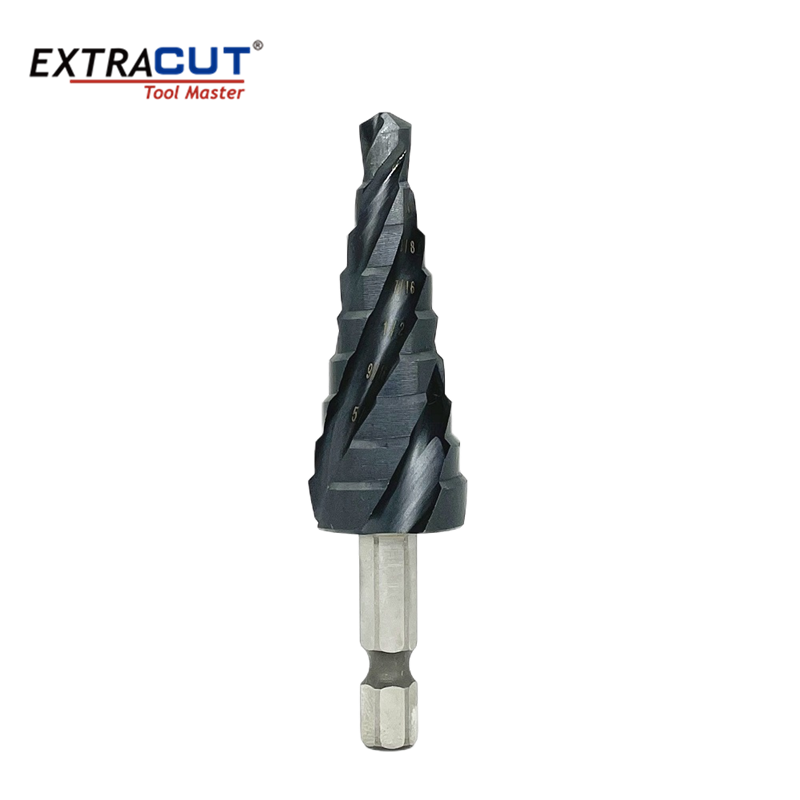
TiAlN-coated step drill: one bit, many hole sizes in sheet metal.
View product
HSS annular cutter for structural steel on a magnetic drill.
View product
Zirconia flap wheel for deburring and blending in one pass.
View productShort list, long consequences. These apply to every job on this page.
The questions our technical team answers most often.
Send us the material, the machine and the finish you need. Our engineers will specify the blade, bond or bit — and quote it with a sample if you want to test before you commit.