ISO 9001 Certified OEM & ODM Service Global Shipping to 50+ Countries Since 2007 · Hangzhou, China EN 13236 Standard 24/7 Technical Support ISO 9001 Certified OEM & ODM Service Global Shipping to 50+ Countries Since 2007 · Hangzhou, China EN 13236 Standard 24/7 Technical Support
EXTRACUT diamond blade on a walk-behind floor saw cutting asphalt on a road job site
Manufacturing Process · Hangzhou, China

From raw diamond crystal to your loading dock.

Seven controlled stages — raw material, production, quality control, packaging, dispatch, transport and customs clearance. Every diamond saw blade, drill bit and hole saw we export passes through all seven before it leaves our gate.

  • ISO 9001:2015 QMS
  • EN 13236 tested
  • FOB Shanghai / Ningbo
  • Own export licence
07Controlled stages
17QC checkpoints
248Product models
50+Export markets
01
Stage One

Raw material, tested before it enters the line.

Nothing goes into the mixer on trust. Every incoming batch of diamond grit, metal bond powder and steel substrate is sampled, measured and logged against our incoming-inspection standard. A lot without a certificate, or outside tolerance, is rejected at the gate.

MAT-01

Synthetic diamond grit

HPHT-grown monocrystalline grit, screened to a narrow mesh band and matched to the material you actually cut — granite, reinforced concrete, asphalt, porcelain tile or green concrete.

Grading
30/40 – 80/100 mesh
Checked for
Toughness · shape · thermal stability
Concentration
Set per bond & application
MAT-02

Metal bond powders

Cobalt, carbonyl iron, copper, tin and nickel blends with tungsten-carbide additions and porosity regulators. Chemistry is verified per lot, because the bond decides whether a segment glazes or keeps cutting.

System
Co · Fe · Cu-Sn · Ni-WC
Verified
Chemistry · D10/D50/D90 · O₂
Traceability
Lot certificate on file
MAT-03

Steel cores

Laser-cut, stress-relieved 65Mn and 75Cr1 cores for diamond blades, supplied across the full 100–600 mm diameter range. Every blank is checked for hardness, flatness and bore runout before it is accepted into stock.

Cores
65Mn · 75Cr1 · 100–600 mm
Flatness
≤ 0.10 mm on arrival
Core hardness
42–48 HRC
STEEL CORE WELD 0.8–1.2 mm DIAMOND SEGMENT SYNTHETIC DIAMOND GRIT SINTERED METAL BOND
FIG. 01 Segment cross-section — diamond crystals locked into a sintered metal matrix, welded to a stress-relieved steel core rather than glued to it.

The bond is the tool. We specify it, not buy it off a shelf.

Hardness of the diamond is a given — every supplier has the same crystals. What separates a blade that cuts 120 m of reinforced concrete from one that glazes at 40 m is the metal bond holding those crystals, and the porosity that lets the matrix wear back exactly fast enough to keep fresh diamond exposed.

So we treat the bond as a formulation, not a commodity. Freight-cost-driven substitution of cobalt with iron is exactly the corner we refuse to cut, and it is the first thing a customer notices when they compare our blade against a cheaper one on the same wall.

Cobalt-bonded Free-cutting iron bond Turbo / segmented / roof Wet & dry formulations
Incoming inspection — what a raw-material lot has to pass
Material What we measure Instrument Acceptance
Diamond grit Mesh size distribution, impact toughness, thermal stability after 1,100 °C Ro-Tap sieve shaker, friability tester, stability furnace ±3 % mesh tolerance; strength index ≥ 45
Metal bond powder Chemical composition, particle size D10 / D50 / D90, oxygen content Spectrometer, laser particle sizer, LECO O/N analyser Mill certificate required; O₂ within spec
Steel core / blank Hardness, thickness, flatness, centre-bore runout Rockwell tester, micrometre, dial gauge 42–48 HRC; flatness ≤ 0.10 mm
02
Stage Two

Production — ten operations, one roof.

Pressing, sintering, laser welding, grinding, heat treatment and coating all happen in-house. Process parameters stay in our hands instead of a subcontractor's, and cycle data is logged per furnace load and per welding program — which is the only reason a QC report means anything later.

  1. 01

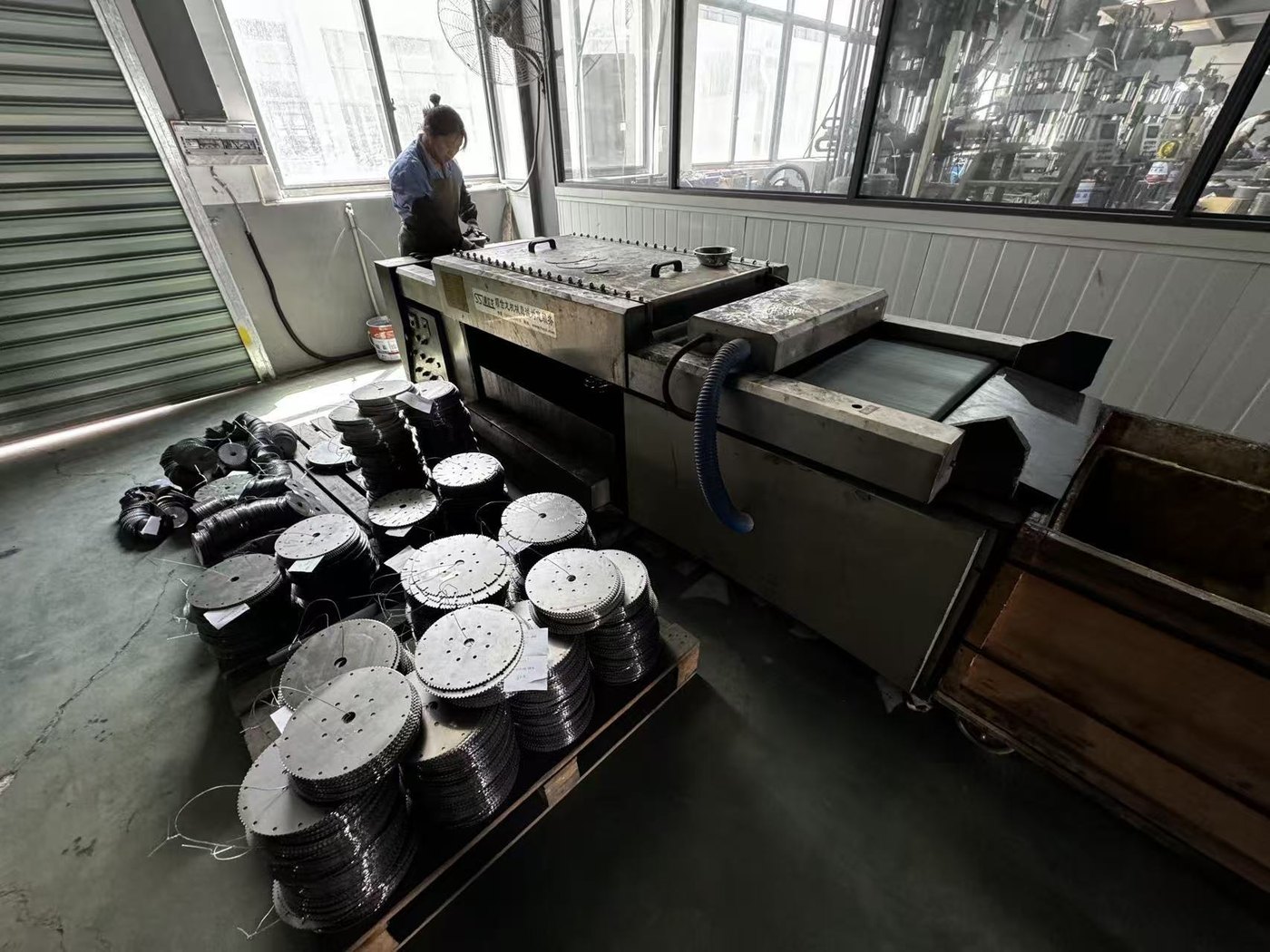
    Blade body washing

    Steel cores arrive from the mill with rolling oil and an anti-rust film on them. They go straight through the washing line — degreased, rinsed and dried — before anything else touches them, so welding, grinding and painting all start from clean, bare steel.

    • Degrease · rinse · dry
    • First operation on the line
  2. 02

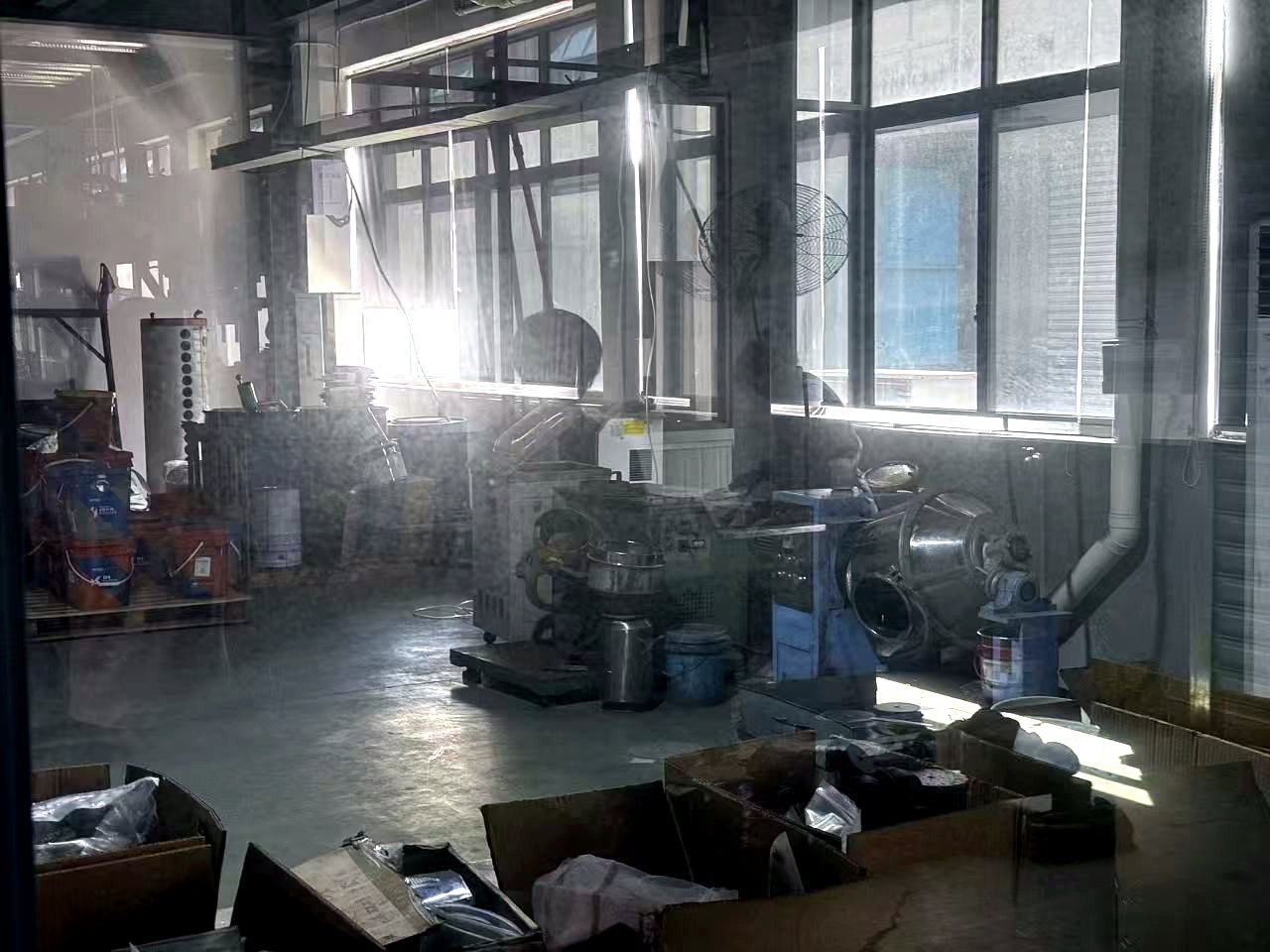
    Powder blending & granulation

    Diamond grit and metal powders are ball-milled to a homogeneous mix, then granulated into a free-flowing granulate so a uniform matrix surrounds every crystal. Mixing ratio is recorded against the segment type — a batch is never "topped up" from another drum.

    • Ball mill
    • Granulate flow-rate verified
    • Batch card issued
  3. 03

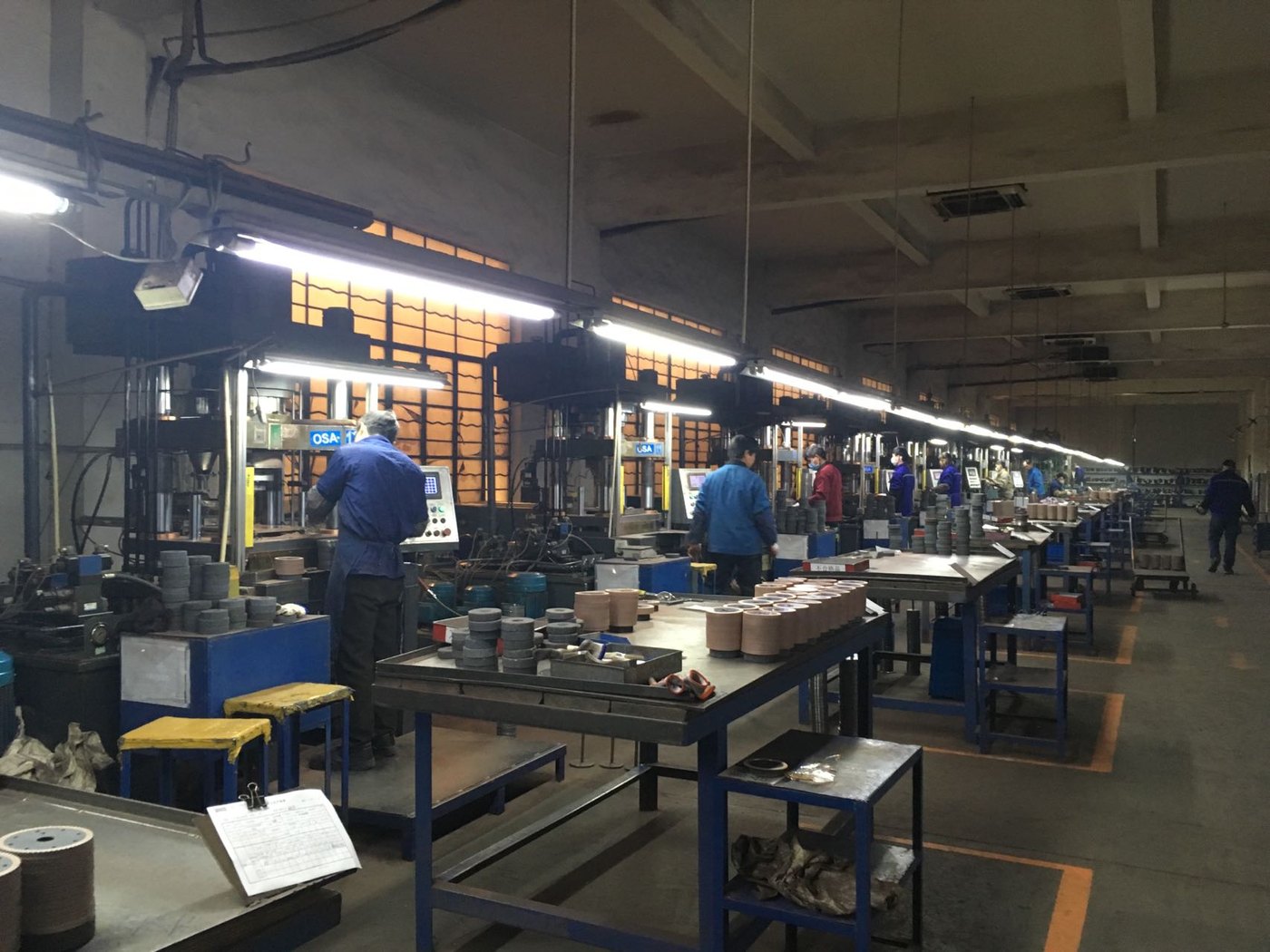
    Cold pressing

    Hydraulic presses and CNC-machined moulds compact the granulate into segment geometry — straight, turbo, roof-type or corrugated. Green density is verified batch by batch, because a segment that is not dense when it is cold will never be dense when it is hot.

    • Green density check
    • Moulds calibrated on schedule
  4. 04

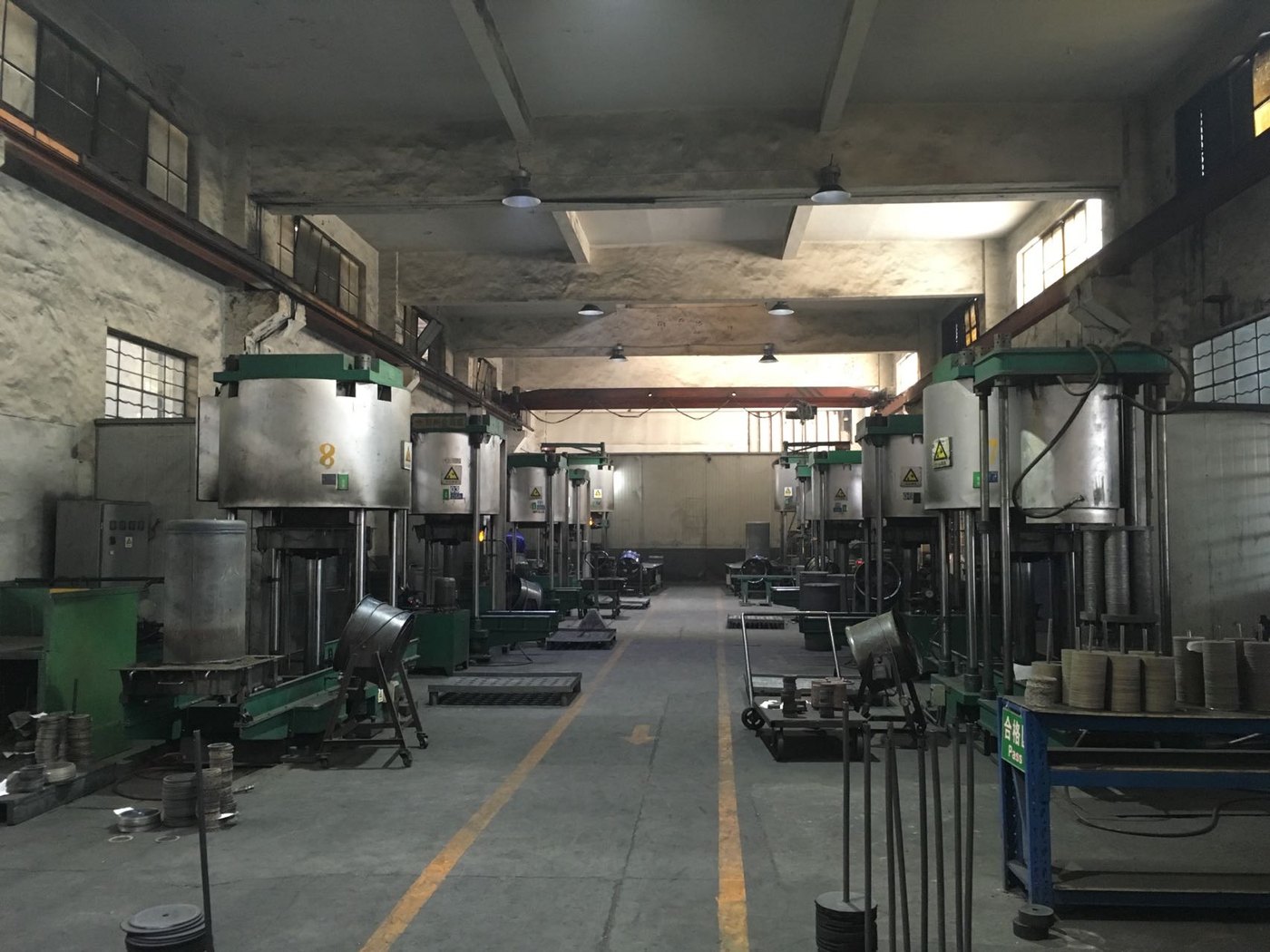
    Hot-press sintering

    Segments are sintered in graphite moulds under vacuum or inert gas on a controlled ramp / soak / cooling curve — typically 700–900 °C with pressure applied to density. The cooling rate is part of the recipe: rush it and you buy micro-cracks that only show up in the field.

    • 700–900 °C
    • Vacuum / inert gas
    • Cycle logged digitally
  5. 05

    Laser welding

    A focused fibre-laser beam fuses segment to steel core, creating a metallurgical bond rather than a glued joint — in practice, a joint stronger than the segment itself. Unlike brazing it puts very little heat into the core, so the blade does not warp and does not need re-tensioning afterwards.

    • Metallurgical bond
    • 105–600 mm in-house
    • Low heat input · no warp
  6. 06

    Heat treatment

    Welded blades go back into the high-pressure furnace for a consolidation sinter. Under heat and pressure the segment bond densifies further and grips the diamond crystals tighter — which is what keeps the cutting edge sharp — while the steel core is hardened and stress-relieved so it stays flat at working temperature.

    • High-pressure furnace
    • Segment & core consolidated
    • Core hardness raised
  7. 07

    Tensioning, truing & side grinding

    Cores are rolled to a controlled tension and the faces and sides ground flat, so the blade runs true at full RPM instead of wobbling the cut open. Axial runout is read on a dial gauge before the blade is allowed to move on.

    • Controlled tension
    • Runout on dial gauge
  8. 08

    Teeth grinding & flute grinding

    Segments are ground to their final tooth profile — rake, clearance and gullet geometry per drawing — and the flutes between segments are opened so slurry and debris clear the cut. This is where a sintered blank becomes a cutting edge: sharpness is ground in, not baked in.

    • Profile per drawing
    • Gullets opened & dressed
  9. 09

    Painting

    Blade bodies are spray-painted in the family colour and cured, sealing the steel against rust through storage, ocean transit and time on your customer's shelf. Colour is also functional: it identifies the application line at a glance.

    • Anti-rust cured film
    • Colour-coded by application
  10. 10

    Laser marking

    Every blade is laser-marked with diameter, bore, maximum RPM, rotation direction and your part number — the last operation on the line, and the one that ties the physical blade back to its batch record.

    • Diameter · bore · max RPM
    • Laser-marked traceability
Blade body washing machine with stacks of steel blade cores waiting to be cleaned
FIG. 02 Blade body washing — the first operation on the line: incoming steel cores degreased, rinsed and dried.
Diamond powder blending room with mixer and weighed batch containers
FIG. 03 Diamond powder blending — every batch weighed, mixed and logged before it ever reaches a mould.
Cold-press line with operators forming diamond segments, Hangzhou plant
FIG. 04 Cold-press line — blended diamond and metal powder pressed into segment blanks, one station per mould.
Row of hot-press sintering furnaces in the diamond blade plant
FIG. 05 Hot-press sintering aisle — segments fuse at 700–900 °C under controlled pressure and atmosphere.
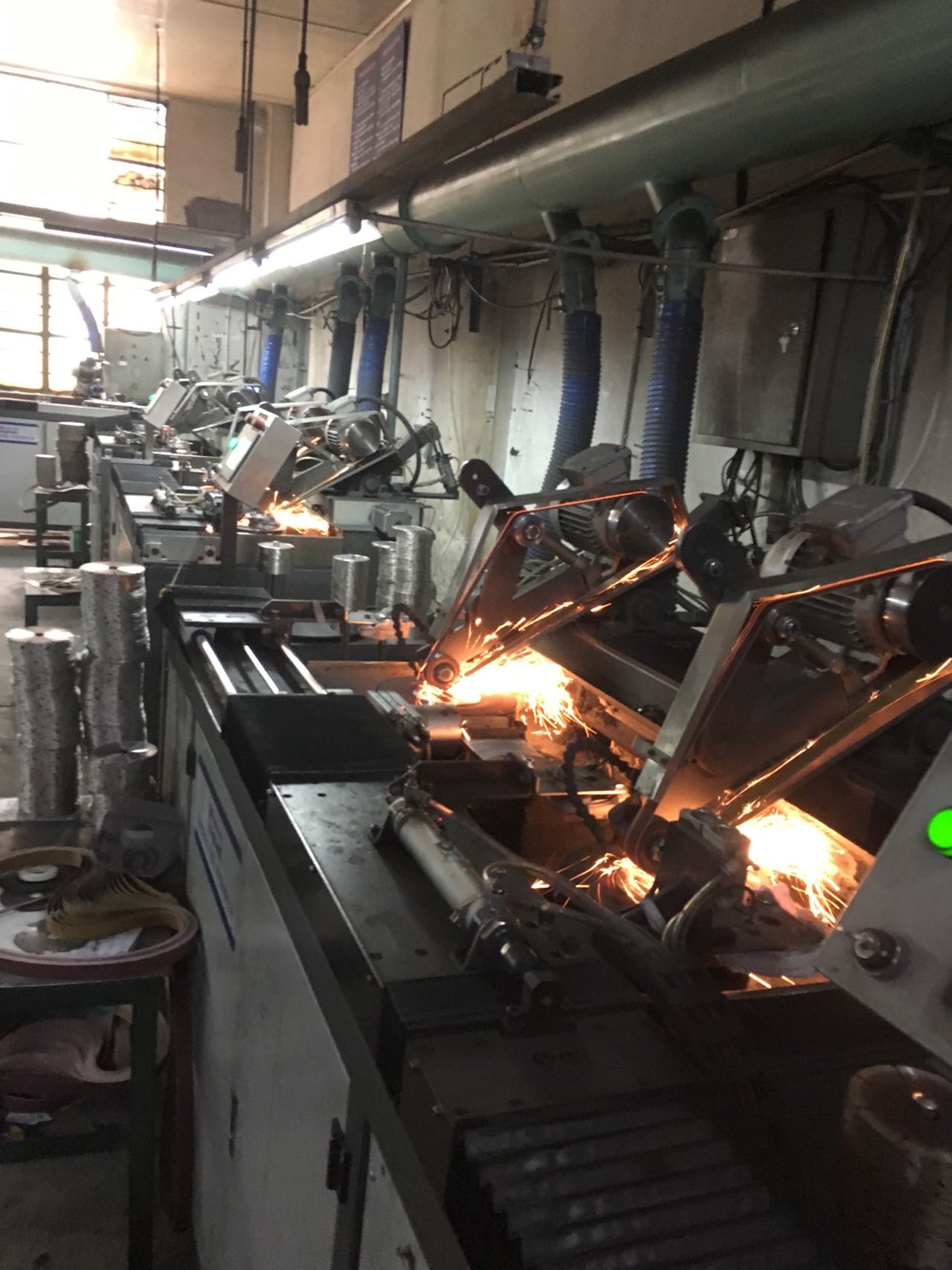
Automatic welding stations brazing diamond segments onto blade cores, sparks flying
FIG. 06 Automatic welding — every segment brazed to the steel core; the sparks tell you the joint is forming right.
03
Stage Three

Quality control — seventeen checkpoints, not a final glance.

Inspection is spread across the whole line rather than saved for the end, when it is too late to do anything except scrap the batch. Twelve checkpoints sit inside production, five guard final release — and failing any one of them stops the lot.

Material certificateLot certificate matched to the physical batch received.
Grit mesh & strengthSize distribution and toughness index sampled per lot.
Powder chemistryComposition and particle-size curve verified before blending.
Mix uniformityGranulate flow rate and blend homogeneity.
Green densityCold-pressed segment mass and density against target.
Sintering logRamp, soak and cooling curve reviewed per furnace load.
Segment hardnessHRB hardness and density on a sampled segment.
Bond microstructureMicroscope check for porosity, cracks and diamond pull-out.
Segment geometryWidth, height and radial length within drawing tolerance.
Weld penetrationBead profile and penetration depth along the joint line.
Weld shear testDestructive shear on a sampled blade from every lot.
Core hardness & tensionCore HRC and rolled tension verified before assembly sign-off.
Axial runoutDial-gauge runout on the finished blade at the bore.
Static balanceBalance check so the blade spins without vibration.
Tooth geometry & edgeRake and clearance angles after grinding; edge free of burrs.
Paint film & markingFilm coverage and cross-cut adhesion; laser-mark content checked.
Final release & cut testVisual release plus a cutting test on the intended material.
Final release criteria — the numbers a lot has to hit
Characteristic Method Release criterion
Segment hardness Rockwell B on a polished segment face Within ±5 HRB of the approved bond spec
Weld shear strength Destructive shear on a sampled blade No joint failure below the specified shear load
Axial runout (TIR) Dial gauge, blade mounted on a test arbor ≤ 0.05 mm for precision blades; ≤ 0.20 mm general purpose
Tooth profile & edge quality Profile projector / toolmaker's microscope Rake and clearance angles per drawing; edge sharp, no grinding burrs
Paint adhesion & marking Cross-cut tape test; visual against the approved sample No flaking after tape pull; marks complete and legible
Cutting performance Bench cut on the intended material Meets the reference cut-rate and life for that SKU

Test blades are scrapped, not shipped. If you want the numbers for your own order rather than the specification, ask — the batch file travels with the shipment.

04
Stage Four

Packaging — built for a 30-day ocean voyage.

Steel tools rust, and a container crossing the Indian Ocean in July is a humid place. Our packing spec starts from that fact: every tool is dried, rust-inhibited and sealed before it is boxed, and every master carton is dimensioned to your pallet and your container rather than to ours.

PCK-01

Cleaning & rust inhibition

Tools are degreased, dried and protected with vapour-phase inhibitor paper, a light oil dip, or a dry-film coating depending on the product family. What we manage is the humidity inside the transit pack, not just what sits on the surface.

Options
VCI paper · oil dip · dry film
Managed
In-pack relative humidity
PCK-02

Retail packaging

Blister card, skin pack, colour box, display box or PVC pouch. Barcodes, multilingual text and warning pictograms are printed to your market's requirement — we proof the artwork with you before the first run, not after.

Formats
Blister · skin · colour box · pouch
Artwork
Your brand or EXTRACUT
PCK-03

Inner & master cartons

Individual pack → inner box → master carton, or a single-layer bulk carton if your warehouse prefers it. Board grade, dimensions and case marks are agreed before the first shipment and then kept identical on reorders.

Structure
Retail → inner → master
Marking
Case mark + shipping marks
PCK-04

Palletising & wrapping

Export pallets are heat-treated and ISPM 15 marked, cartons are stretch-wrapped, and corner boards are added for LCL consignments that will be handled more than once. Pallet height is kept to the container's usable clearance.

Pallets
Heat-treated · ISPM 15 marked
Protection
Stretch wrap + corner boards
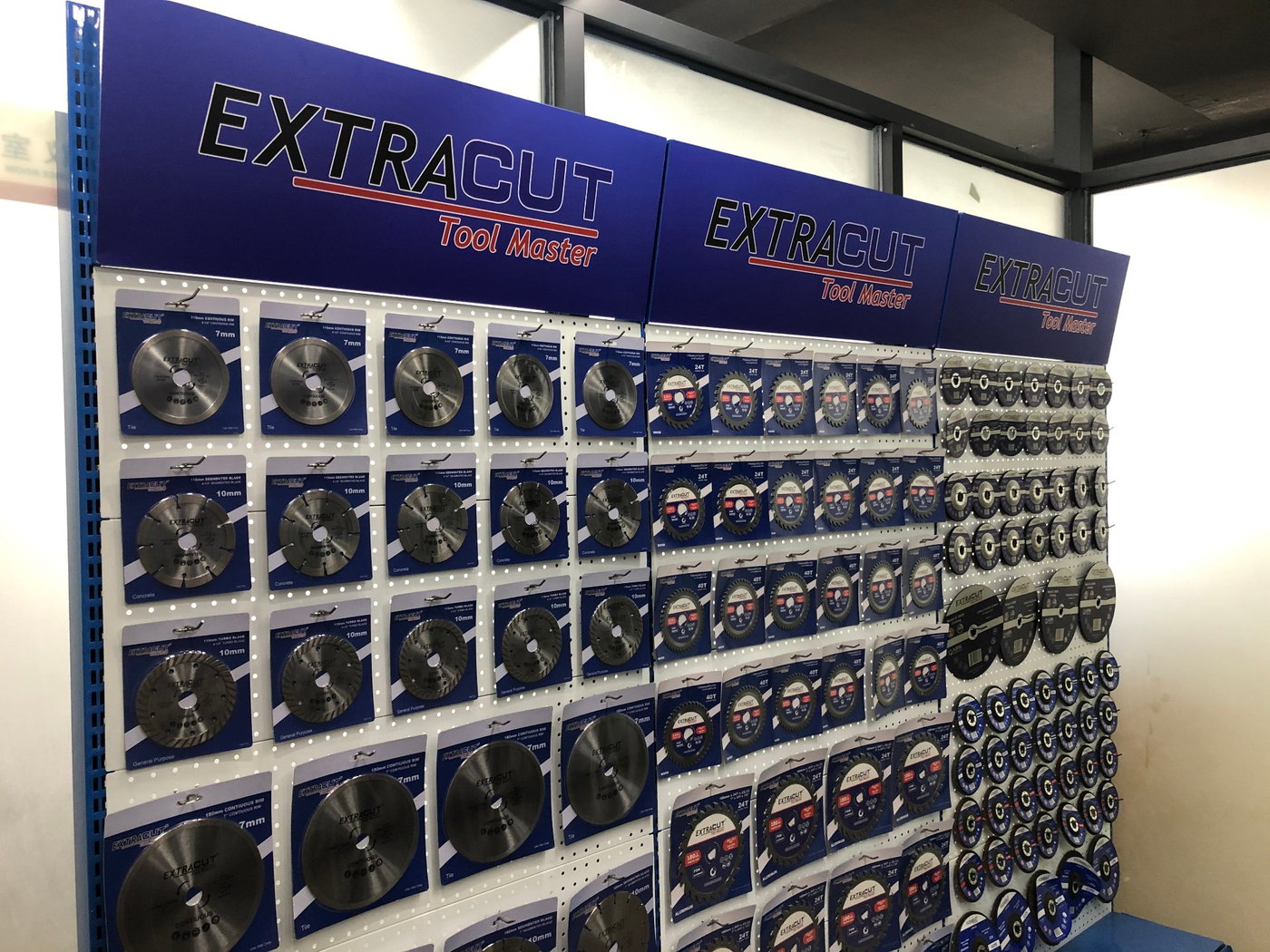
EXTRACUT display wall of blister-packed diamond saw blades
FIG. 07 Blister-packed blades on the sample-room wall — the same packs that ship.
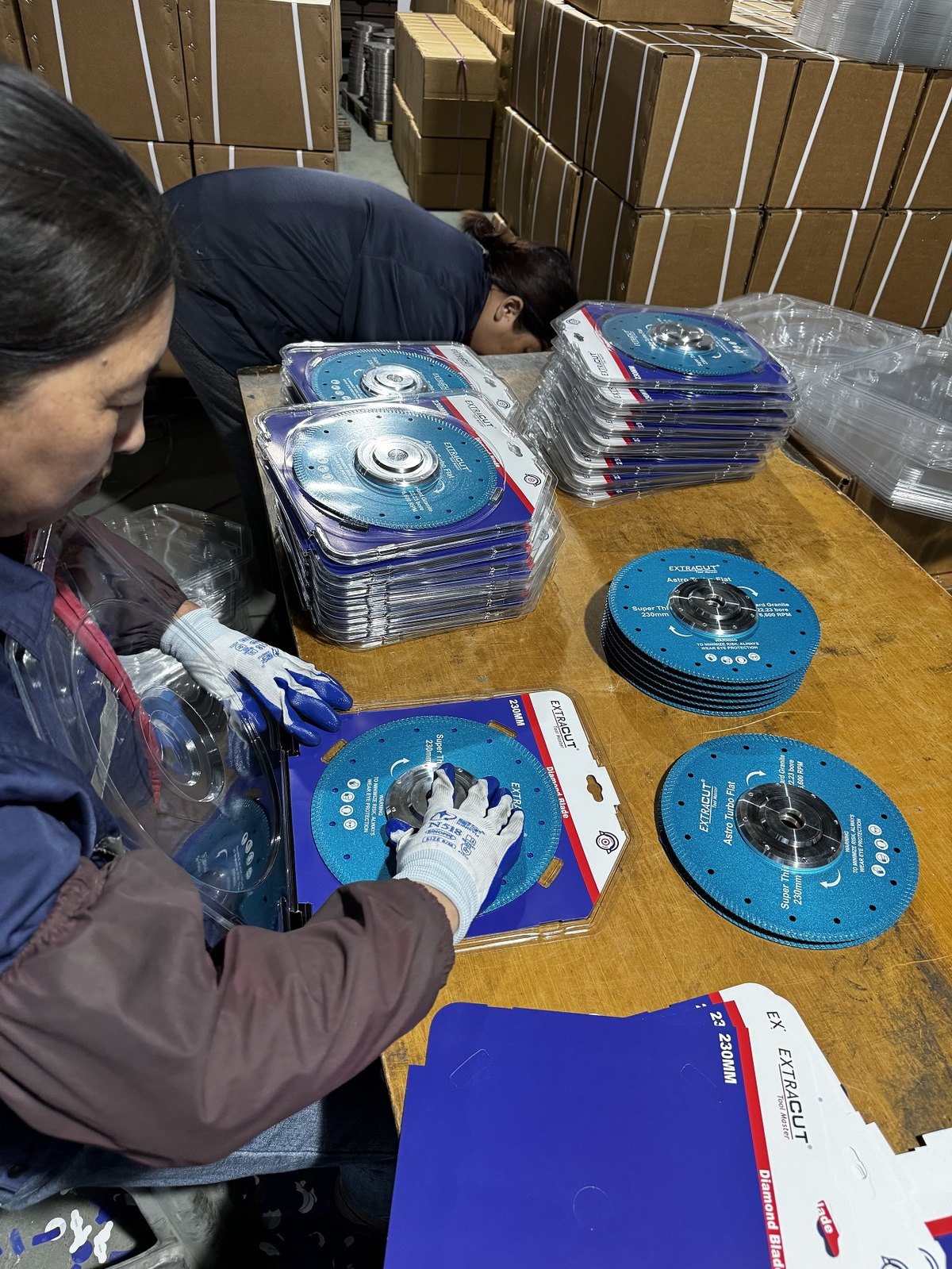
Workers blister-packing blue EXTRACUT diamond saw blades at the packing table
FIG. 08 Packing line — blades carded, counted and boxed; every carton matches the packing list line by line.
Standard pack specification
Product family Unit pack Inner / master carton Protection
Diamond saw blades Blister card or colour box, 1 pc 10–50 pc per master carton VCI paper + cardboard divider
Drill bits PVC pouch, skin pack or plastic tube 50–200 pc per master carton VCI paper, tip-protected
Hole saws Colour box with pilot bit 20–50 pc per master carton Foam or board insert
Abrasive discs & cups Shrink sleeve, 5–10 pc 100–200 pc per master carton Edge-protected, flat-stacked
Bulk / OEM Poly bag per piece Carton or pallet box, your spec Per agreement
05
Stage Five

Dispatch — one loading plan, no surprises at the port.

Before we book a container we build a loading plan for your exact mix of cartons and confirm the cubic metres against your quote. You approve that plan together with the packing list; we load to it. If a pallet has to be re-stacked on the dock, you hear it from us the same day — not from your forwarder three weeks later.

  1. 01

    Order consolidation & pick

    Finished goods are picked against your order line by line, and any shortfall is flagged before booking rather than discovered at the loading bay. Mixed-SKU orders are staged by carton mark.

  2. 02

    Palletising & weighing

    Cartons are palletised to the loading plan, weighed, and measured per pallet. Net and gross weights on the packing list come off this scale, not from a theoretical calculation.

  3. 03

    Loading plan & container selection

    We match the shipment to a 20'GP, 40'GP, 40'HQ or an LCL consolidation, then produce a top-view loading layout showing pallet positions and residual space. You get it as a PDF you can forward straight to your warehouse.

  4. 04

    Loading, photographed & sealed

    Container doors are photographed empty, during loading and fully loaded; the seal number is recorded and the seal photographed in place. That photo set travels with the shipping documents, so there is a shared record if anything is ever disputed in transit.

Loading plan — worked out before the container is booked.

A typical mixed order of blister-carded blades, boxed hole saws and pouched drill bits loads with the heavy blade cartons low and forward, and the light retail cartons high and aft. Nothing is packed so tight that your warehouse needs a crowbar.

Photos before / during / after loading Seal number recorded
DOOR FRONT / CABIN P1 BLADES P2 BLADES P3 DRILL BITS P4 DRILL BITS P5 HOLE SAWS P6 HOLE SAWS P7 ABRASIVES RESERVE SPARE CBM 12.03 m · 40'HQ 8 PALLETS · 68 CBM NOMINAL
FIG. 09 Indicative 40'HQ loading layout — heavy blade cartons low and forward, spare cube reserved for a last-minute line.
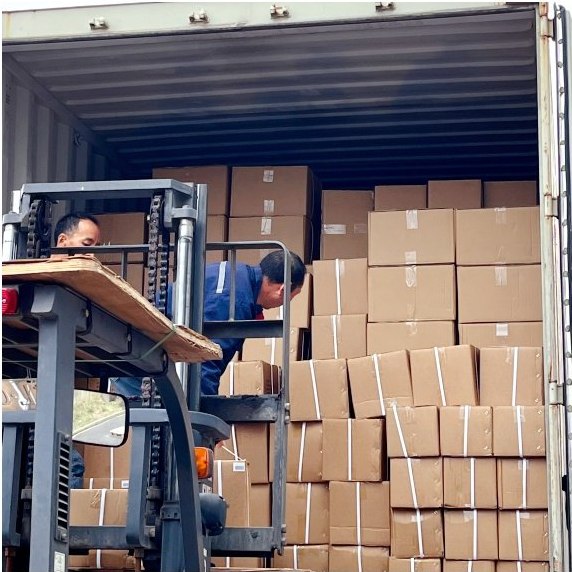
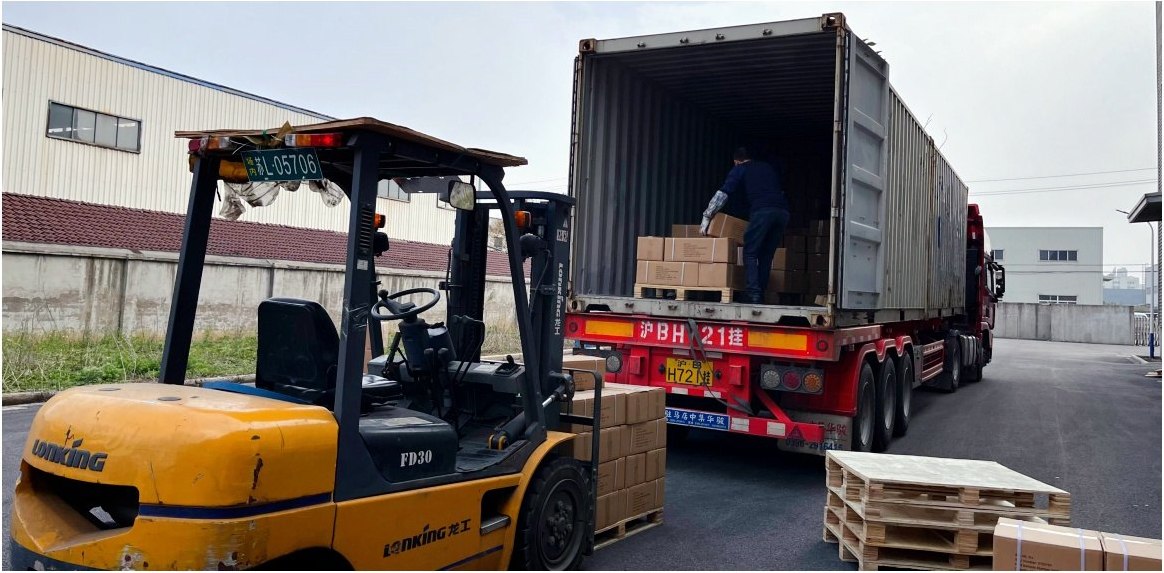
Forklift feeding cartons into a container already stacked floor-to-ceiling
FIG. 10 Forklift to the container mouth — cartons travel the last metres by machine, not on shoulders.
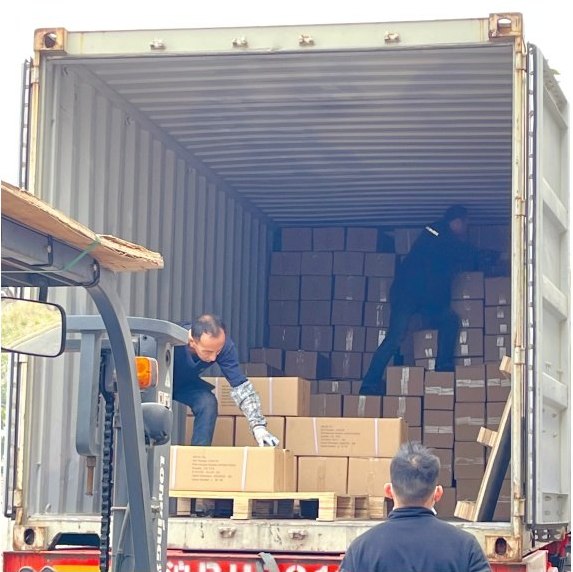
Workers hand-stacking cartons inside the container to the approved loading plan
FIG. 11 Hand-stacked to the approved plan — heavy cartons low, no void left to shift at sea.
Loaded truck at the EXTRACUT dock with forklift alongside, ready to leave for the port
FIG. 12 Loaded, photographed and sealed — the truck leaves for Ningbo or Shanghai the same day.
Container options
Container Internal dimensions Usable volume Typical payload Best for
20' GP 5.90 × 2.35 × 2.39 m ≈ 28 CBM ≈ 21,000 kg Single-family orders, first trial container
40' GP 12.03 × 2.35 × 2.39 m ≈ 58 CBM ≈ 26,000 kg Mixed orders with heavy cartons
40' HQ 12.03 × 2.35 × 2.69 m ≈ 68 CBM ≈ 26,000 kg Mixed or light retail-packed orders
LCL Consolidated at forwarder By cubic metre — Trial orders, mixed SKUs, low volume
06
Stage Six

Transport — Ningbo or Shanghai, on the mode that fits.

Our plant sits roughly 150 km from Ningbo-Zhoushan and 190 km from Shanghai, so we can take a late cut-off and still make the sailing. Sea, air, rail and express are all booked through forwarders we have shipped with for years — and we tell you the real transit window, not the one that wins the order.

Transport modes
Mode Best for Typical transit Notes
Sea freight — FCL Full-container orders 12–40 days port to port Lowest cost per kg. Direct sailings from Ningbo and Shanghai to most hubs.
Sea freight — LCL Trial orders, mixed SKUs FCL transit + 5–10 days Consolidated at the forwarder's warehouse; cartons must be pallet-friendly.
Air freight Urgent restock, samples 3–8 days door to door Chargeable weight from 45 kg. Ex Hangzhou Xiaoshan or Shanghai Pudong.
Rail — China / Europe Central & Eastern Europe 18–22 days A middle option between sea and air; capacity is booked early.
Express courier Sample parcels, small spares 3–6 days DHL / FedEx / UPS. DDP available for samples.
Indicative sea transit from Ningbo / Shanghai
Destination Port of discharge Typical transit
JapanTokyo · Yokohama · Osaka5–8 days
South Korea / SingaporeBusan · Singapore4–8 days
Middle EastJebel Ali · Dammam18–25 days
Australia / New ZealandSydney · Melbourne · Auckland18–22 days
US West CoastLos Angeles · Long Beach14–18 days
US East CoastNew York · Savannah · Houston30–35 days
North EuropeRotterdam · Hamburg · Felixstowe30–35 days
MediterraneanGenoa · Valencia · Piraeus28–34 days
South AmericaSantos · Buenos Aires · Callao32–40 days
AfricaDurban · Lagos · Mombasa25–35 days

Transit times are indicative, exclude destination customs clearance, and shift with the sailing schedule and season. We confirm the actual schedule against your required-on-board date before booking, and send you the booking confirmation and vessel details in writing.

07
Stage Seven

Customs & documentation — a set that clears first time.

We export under our own licence and issue the full document set within two working days of the bill of lading. Where a destination needs a preferential certificate of origin, we apply for it ourselves rather than leaving your broker to chase us for it.

Invoice & packing list Itemised by SKU, with net and gross weight and carton count matching the loading plan exactly.
Bill of lading / air waybill Original, telex release or sea waybill — whichever suits your payment terms and bank.
Certificate of origin CCPIT general CO for standard markets, or Form A / Form E / FTA CO where preferential duty applies.
Insurance certificate CIF and CIP shipments covered at 110 % of invoice value, with institute cargo clauses A.
Fumigation / ISPM 15 Heat-treated pallets with the ISPM 15 stamp; phytosanitary certificate on request.
Test reports & conformity EN 13236 test reports for superabrasive blades, CE declaration of conformity, MSDS where relevant.
HS classification Pre-classified per SKU, and confirmed on the invoice before shipment against your market's tariff line.
China export declaration Filed through the single window, with the export tax-refund record kept on file for the order.
ORDER confirmed PI / SC deposit PRODUCTION + QC release batch record QC report BOOKING loading plan booking note loading photos EXPORT DECL. China customs declaration form tax-refund file B/L ISSUED vessel departs B/L + CO + insurance YOUR WAREHOUSE import clearance full doc set within 2 working days DOCUMENT FLOW · ORDER TO DELIVERY
FIG. 13 What is issued, and when. The full set reaches you within two working days of the bill of lading.
Main HS codes — China export lines
Product family HS code Description
Diamond circular saw blades 8202.3910 Circular saw blades with working part of natural or synthetic diamond, or cubic boron nitride
Circular saw blades, other 8202.3990 Other circular saw blades including slitting or slotting blades
Drill bits (non-rock) 8207.5090 Tools for drilling, working part of other materials — HSS twist, step and core drills
Diamond milling / grinding tools 8207.7010 Tools for milling, with working part of natural or synthetic diamond or CBN
Diamond grinding wheels 6804.21 Grinding wheels and the like of agglomerated synthetic or natural diamond
Hole saws & core bits Per working part Classified by the working part — diamond, carbide or bi-metal HSS edge

These are our standard China export lines. The binding classification for your import is your own customs authority's decision — we confirm the code on the commercial invoice before shipment, and can supply a pre-classification note for your broker if you need one.

Trade terms & lead time.

Quoted in USD and EUR, with the Incoterm written into the contract rather than settled by habit. Production lead time starts from the date we receive your deposit and approved artwork.

EXW Collected from our warehouse by your forwarder. Simplest for buyers with their own China consolidator.
FOB Loaded on board at Ningbo or Shanghai, export declaration included. Our default and the most common basis for repeat orders.
CFR / CIF Freight, or freight plus 110 % insurance, to your port of discharge. Useful for LCL and for buyers without a nominated forwarder.
DDP Delivered duty paid to your door, import clearance and duty settled by us. Available for samples and for established accounts.
Production lead time
Order type Lead time Notes
Stock items 3–5 working days Standard diameters and bores held in the Hangzhou warehouse.
Sample order 5–7 working days Sent by express at our cost for qualified buyers.
OEM / ODM branded order 20–30 days Counted from artwork approval, not from PO.
Custom formulation or new mould 30–45 days Includes mould fabrication and a pre-production sample for your sign-off.
Next Step

Want to see it running? Book a live video audit.

Fifteen minutes is enough. We walk a camera through the laser welding cell, the QC bench and your packed cartons on the day they load — before you commit to the order, not after.

  • Live walk-through of the welding cell, grinding line and QC bench
  • Batch records and QC reports for the order you are considering
  • Packing and container-loading photographs before departure
  • Third-party inspection — SGS, BV or TÜV — always welcome
  • Free samples for evaluated specifications, tested on your own machine